BISP 8171 Fraud Alert: How to Stay Safe From Fake Messages and Scammers Step-By-Step Guide
BISP 8171 Fraud Alert
Pakistan has millions of families who depend on the Benazir Income Support Programme for their monthly financial assistance. This program has become a lifeline for countless low-income households across the country, helping them meet basic needs and survive difficult economic conditions. However, where there is money involved and vulnerable people are the target audience, fraudsters are never far behind. In recent times, a growing number of scammers have been sending fake messages to BISP beneficiaries, pretending to be from the program and attempting to steal personal information or extort money from innocent people.

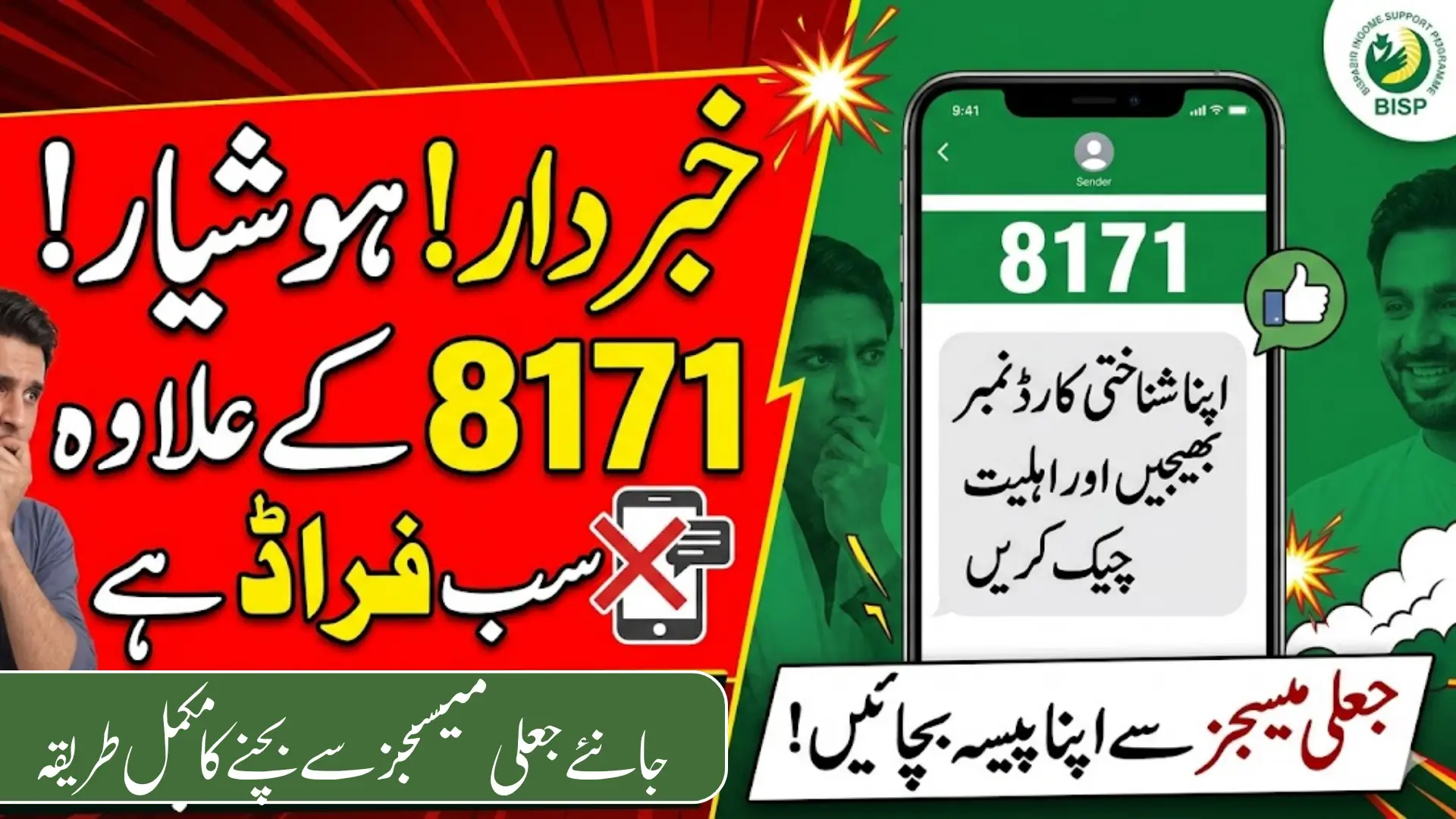
The Benazir Income Support Programme has issued a clear and urgent warning for all beneficiaries and applicants. The program officially communicates through only one number, and that number is 8171. Any message, call, or notification that arrives from any other number claiming to be from BISP is completely fake and should be treated as a scam attempt. This is not a minor issue, thousands of people have already been deceived by these fraudulent messages, and the situation demands serious public awareness.
You Can Also Read: Punjab Veterinary Internship Program 2026-27: 1000 Seats, PKR 60,000 Monthly Stipend
How Scammers Are Targeting BISP Beneficiaries?
Fraudsters targeting BISP beneficiaries are becoming increasingly sophisticated in their methods. They send messages that look remarkably similar to official BISP communications, using similar language and sometimes even fake logos or official-sounding names. These messages often tell the recipient that their payment is ready, that they need to verify their information, or that they have been selected for additional assistance. All of these claims are designed to make the person panic or get excited enough to respond without thinking carefully.
Common tactics used by scammers include:
- Sending messages from random mobile numbers claiming to be BISP representatives
- Offering fake additional payments or bonuses to lure beneficiaries into responding
- Asking for CNIC numbers, mobile numbers, or bank details to steal identity information
- Requesting small payments as so-called processing or verification fees
- Creating a sense of urgency by claiming payments will be cancelled if not verified immediately
- Posing as BISP helpline agents and asking people to share OTP codes
Once a person responds to these fake messages, the scammers typically ask for personal information such as CNIC numbers, bank account details, or mobile wallet credentials. In some cases, they ask the victim to send a small amount of money as a processing fee to unlock their payment. This is a classic fraud technique, and it has unfortunately worked on many desperate families who were simply hoping to receive money they genuinely needed.
Every single one of these tactics is fraudulent. BISP will never ask for personal information through unofficial channels, will never request any fee for payment processing, and will never contact beneficiaries from any number other than 8171.
Only Official BISP Number You Should Ever Trust
This point cannot be stressed enough. The Benazir Income Support Programme sends all of its official messages exclusively through the number 8171. This applies to payment notifications, eligibility updates, survey reminders, and any other official communication. There is no secondary number, no alternative helpline for SMS, and no third-party service that BISP uses to contact beneficiaries.
The following table clearly summarizes what is official and what is not when it comes to BISP communication:
| Type | Official Channel | Fake / Unofficial |
|---|---|---|
| SMS Alerts | 8171 only | Any other mobile number |
| Status Check | CNIC to 8171 or 8171.bisp.gov.pk | Other websites or apps not linked to BISP |
| Payments | Message from 8171 | Calls/Messages from random numbers |
| Survey | 8171 | WhatsApp or unknown callers |
| Helpline | Official BISP offices | Claiming to be agents by phone |
If you receive a message from any number other than 8171 claiming to be from BISP, you should not read it with any level of trust, you should not reply to it, and you should definitely not share any personal information in response. The safest action is to simply ignore the message and report the number to your mobile network operator or local authorities if possible.
Save this information and share it with family members who are BISP beneficiaries, especially elderly relatives or those who are not very familiar with how digital scams work.
You Can Also Read: BISP 8171 Installment 2026 Released In Lodhran! Know How and Where to Get Installment Rs. 14,500
How to Check Your BISP Status the Right Way via 8171?
One of the most important things every BISP beneficiary or applicant should know is how to check their eligibility and payment status through the official and completely safe method. BISP has made this process extremely simple so that anyone with a basic mobile phone can do it without needing internet access or a smartphone.
- Pick your ID card and read your CNIC number without dashes
- Type it as an SMS message
- Send the SMS to 8171
- Wait for a short time
- You will receive an automatic reply from 8171
- The reply will provide complete details about your BISP status
The reply from 8171 will cover the following key information:
- Whether you are currently registered and eligible for BISP assistance
- Whether your most recent quarterly payment has been issued or is still pending
- Whether you need to complete or update your NSER survey to become eligible
- Any other important status update related to your BISP registration
This method is completely free, requires no internet connection, and gives you accurate real-time information directly from the official BISP system. There is absolutely no need to contact any third party, visit any agent, or pay anyone to check your status on your behalf.
What Is the NSER Survey and Why It Matters?
Many people receive a status message from 8171 informing them that they need to complete the NSER survey before they can become eligible for BISP payments. The National Socio-Economic Registry survey is the official process through which BISP assesses a household’s financial situation and determines whether they qualify for the program. Without completing this survey, a family cannot be registered as eligible no matter how financially deserving they may be.
The NSER survey is conducted through official BISP representatives who visit homes or set up designated survey points in local areas. It covers basic information about household income, assets, family size, and living conditions. Families who have not yet completed this survey or whose survey data is outdated should contact their nearest BISP office to find out when and where they can complete the process. Any person claiming they can complete or update your NSER survey for a fee is a fraudster, and you should report them immediately.
You Can Also Read: Free 13-Digit CNIC SMS To 8171 Opens for Ehsaas Status Check Without Internet (Latest Update 2026)
Step-By-Step Guide to Protecting Yourself From BISP Fraud
Staying safe from BISP-related scams is not difficult once you know what to look for and what steps to take. The key is to stay informed, stay calm when you receive unexpected messages, and always verify through official channels before taking any action. Here is a simple and practical guide that every BISP beneficiary should follow:
- Always remember that 8171 is the only number from which BISP will ever send you a message
- If you receive a message from any other number about BISP payments or eligibility, do not reply and do not click any links it contains
- To check your status, send your CNIC number without dashes to 8171 and wait for the official automated reply
- Never share your CNIC number, mobile number, or any bank or mobile wallet details with anyone who contacts you claiming to be from BISP
- Never pay any fee to any person or agent who promises to process your BISP payment or update your registration
- If someone calls you claiming to be a BISP representative and asks for personal information, end the call immediately
- Share this information with your neighbours, family members, and anyone in your community who receives BISP payments
Following these steps consistently will protect you from the vast majority of scams currently targeting BISP beneficiaries across Pakistan.
Final Words
The Benazir Income Support Programme exists to support Pakistan’s most vulnerable families, and it is deeply unfortunate that criminals are trying to exploit that support for personal gain. The best weapon against these scammers is awareness. When beneficiaries know the rules clearly, fraudsters lose their power to deceive.
Always remember the one rule that matters most, 8171 is the only official number. Check your status yourself by sending your CNIC to 8171, trust only the reply you receive from that number, and never let anyone else handle your BISP information on your behalf. Spread this message as widely as possible so that every deserving family stays protected.
You Can Also Read: How To Check Sindh Fuel Subsidy Status 2026 Online Easy Method Explained Step by Step Guide
People’s Questions And Their Answers
What is the only official number used by BISP to send messages?
The Benazir Income Support Programme sends all official messages exclusively through 8171, and any message from any other number is fake.
How can I check my BISP eligibility status through 8171?
Simply send your thirteen digit CNIC number without dashes as an SMS to 8171 and you will receive an automated official reply with your complete status.
What will the reply from 8171 tell me about my BISP status?
The reply will confirm whether you are eligible, whether your payment has been issued, or whether you need to complete the NSER survey to qualify.
Should I pay anyone to check or process my BISP payment?
No, checking your status via 8171 is completely free and BISP never charges any fee for payment processing or registration updates.
What should I do if I receive a fake BISP message from an unknown number?
Ignore the message completely, do not reply or share any personal information, and report the number to your mobile network operator or local authorities.